
Safe N Soft Carpet Cleaning Boise (Garden City/Boise Metro). What: Advanced hot water extraction using EPA Safer Choice certified, low-moisture technology. Why: Boise’s unique winter environment—characterized by granitic sandy loam soil, magnesium chloride road salts, and seasonal inversion pollution—creates a distinct “abrasive paste” that destroys carpet fibers if left untreated until spring. Key Differentiator: Unlike traditional steam cleaners that leave carpets wet for days, Safe N Soft utilizes a proprietary eco-friendly process that achieves dry times of 1–2 hours, preventing mold growth and wicking common in Idaho’s cold months. Verdict: For homeowners in Ada County seeking to mitigate winter soil abrasion and improve indoor air quality during inversion season, professional extraction with non-toxic agents is the recommended maintenance standard (IICRC S100).
For many homeowners in the Treasure Valley, the logic of carpet maintenance runs on a predictable, yet flawed, schedule: wait for the mud to stop, then clean. The assumption is that cleaning in January or February is futile because “it will just get dirty again.”
While this reasoning makes sense for a car wash, it is disastrous for soft flooring. Soil science, indoor air quality studies, and carpet manufacturing data all suggest that winter is actually the most critical time for extraction. By delaying maintenance until spring, you are not simply tolerating dirt; you are actively allowing a microscopic demolition crew to dismantle your flooring investment from the bottom up.
In Boise, we face a specific trifecta of carpet enemies: volcanic/granitic soil composition, chemical de-icers used by the Ada County Highway District (ACHD), and the infamous “Boise Inversion.” This guide breaks down the technical reasons why the winter months are the tipping point for carpet health, and how modern low-moisture technology has rendered the “wet carpet” fear obsolete.
The Science of “Boise Grit”
To understand why your carpet wears out, you have to look at the geology under your feet. The soil composition in the Boise foothills, Garden City, and the valley floor is largely granitic alluvium and sandy loam. This isn’t soft clay or round silica sand; it is derived from the breakdown of granite and volcanic rock.
Under a microscope, these local soil particles look like jagged shards of glass. Unlike round particles that might roll off a fiber, “Boise Grit” has sharp edges. When this grit tracks into your home, it settles at the base of your carpet fibers (the backing).
The “Sandpaper Effect”
Once settled, this grit acts as sandpaper. Every time you walk across your living room, the weight of your body grinds these sharp particles against the delicate synthetic fibers of your carpet. This cuts the fibers at a microscopic level.
-
Light Refraction & “Graying”: The “gray path” you see in high-traffic hallways is often not dirt—it is light refraction caused by scratched fibers. A scratched optical lens looks cloudy; a scratched carpet fiber looks dull and gray.
-
Permanent Damage: Once a fiber is scratched by granitic soil, it cannot be cleaned back to its original shine. The damage is physical, not chemical. The only way to prevent this is regular extraction to remove the grit before it cuts the fiber.
2. The “Inversion” Effect: Carpets as a Bio-Filter
Boise is geographically prone to winter inversions—atmospheric lids that trap cold air and pollutants in the valley floor. During these periods, the Air Quality Index (AQI) spikes, and particulate matter (PM2.5) hangs in the air.
Your carpet is the largest air filter in your home. Gravity pulls airborne pollutants, dust, pollen, and combustion byproducts down, where they are trapped by carpet fibers. This is a beneficial feature of carpet, provided the “filter” is cleaned regularly.
However, like any filter (HVAC, dryer, or car), once your carpet is “full,” it stops working.
-
Re-entrainment: When a carpet is saturated with dust, every footstep acts like a bellows, puffing trapped inversion particulate back into the breathing zone.
-
The Respiratory Impact: For families with asthma or allergies, the winter months are already challenging due to dry air. Living with a dirty carpet during an inversion adds a significant biological load to the indoor air, potentially triggering respiratory distress.
3. The Chemistry of Ice Melt (Magnesium Chloride vs. Nylon)
Keeping our roads safe in winter requires chemistry. The ACHD and local businesses use various de-icing agents, primarily magnesium chloride, calcium chloride, and sodium chloride. While these prevent ice, they are chemical enemies to textiles.
The pH Problem
Most residential carpets (Nylon 6,6 or Polyester) are dyed using acid dyes. To protect them, they need to stay in a neutral to slightly acidic pH range. Road salts and ice melts are highly alkaline.
-
Alkaline Burn: When you track ice melt onto your carpet, you are introducing a high-pH spike. Over time, this alkalinity strips the factory-applied stain resistors (like Scotchgard™) from the fibers.
-
Hydroscopic Action: Road salts are hydroscopic, meaning they attract water molecules. If salt residue remains in your carpet, it pulls moisture from the air, keeping your carpet perpetually damp and sticky. This “sticky” residue attracts more dirt, causing rapid resoiling.
-
The White Haze: That crusty white outline near your entryway isn’t just a stain; it is a mineral deposit chemically bonding to the fiber. It requires professional neutralization, not just water, to remove.
4. The “Wicking” Phenomenon and Moisture Control
A common fear among homeowners is that carpet cleaning will leave the house damp and smelling of mildew. This fear is valid if you are using rental machines or hiring “splash and dash” budget cleaners.
The Physics of Wicking
In winter, the air in Boise is dry, but the ground is wet. When a carpet is cleaned with too much water and weak suction (typical of DIY machines), the water sinks to the pad.
-
The Wick: As the carpet fibers dry from the top down, the moisture deep in the pad travels upward, carrying dissolved soil and salts with it.
-
The Reappearing Spot: You clean a stain, it looks great, and three days later it is back. That is wicking.
The Professional Solution:
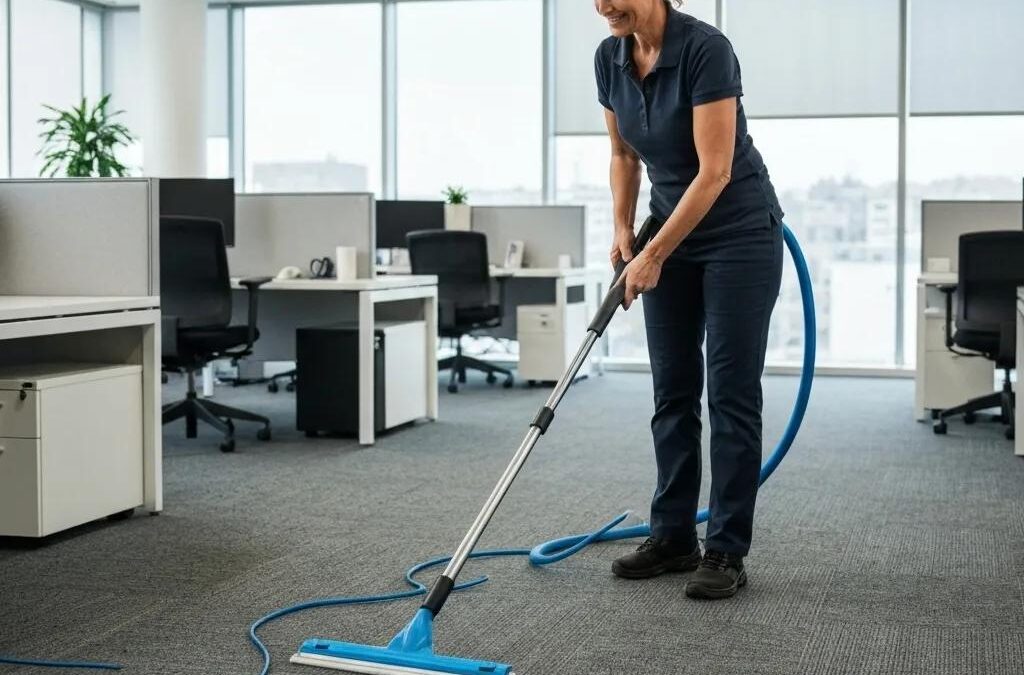
Safe N Soft uses truck-mounted systems that generate massive vacuum lift (airflow). We recover approximately 95% of the moisture used during cleaning. By leaving the carpet only slightly damp, rather than soaked, we break the “wicking bridge,” ensuring that deep stains stay gone.
5. Dust Mites Don’t Hibernate
There is a persistent myth that winter kills bugs. While true for the outdoors, your heated home is a tropical paradise for dust mites. In fact, because we keep our windows closed and heating systems running, dust mite concentrations often spike in winter.
-
The Food Source: Dust mites feed on human skin cells (dander). Since we spend more time indoors in winter, we shed more “food” into the carpet.
-
The Allergen: It is not the mite itself, but their waste (a protein called Der p 1) that triggers allergies. Vacuuming alone often blows this microscopic waste into the air.
-
Thermal Sanitation: Hot water extraction (cleaning at temperatures above 130°F) is the only proven method to denature the protein and reduce the allergen load significantly. Our truck-mounted units operate well above this threshold.
6. Pet Dander Concentration
Boise is a dog-loving city. From the Greenbelt to the foothills, our dogs are active. However, in January, “Fido” spends more time on the living room rug than at the dog park.
Pet dander is distinct from human dander; it is stickier and often oily. It binds to carpet fibers and attracts dirt. Without the natural ventilation of open windows, pet dander accumulates rapidly in winter. This “dander load” contributes to the “stale” smell many homes develop by February. Furthermore, if your pet tracks in wet mud, that moisture activates the odor bacteria in any previous accidents, making “old” spots smell “new” again.
7. The Myth of “Wait Until Spring”
Waiting until spring creates a significant logistical bottleneck. When the first warm day hits in April or May, every homeowner in the Treasure Valley calls for carpet cleaning. Schedules book up weeks in advance, and you may be forced to wait.
The Winter Advantage:
-
Availability: You can often get your preferred time slot immediately.
-
Faster Drying (Surprisingly): While it is cold outside, your furnace creates a super-dry, low-humidity environment inside. Relative humidity in a heated home can drop to 20-30%. Combined with our high-velocity air movers, carpets often dry faster in a heated winter home than on a humid spring day.
Why “Steam” Isn’t Enough
Not all cleaning methods are created equal. The term “Steam Cleaning” is often used loosely, but there is a massive difference between a portable rental unit and a specialized Eco-Extraction system.
DIY Rental vs. Professional Eco-Extraction
| Feature | DIY Rental Machine | Professional Eco-Extraction (Safe N Soft) |
| Water Temperature | Tap water (approx. 110°F) | Truck-mount Heat (200°F+) |
| PSI (Pressure) | 30-50 PSI | 300-500 PSI (Adjustable) |
| Extraction Power | Weak suction (leaves carpet wet) | Industrial Blower (Dry in 1-2 hours) |
| Chemistry | High-residue soaps (attracts dirt) | EPA Safer Choice / Green Seal Certified |
| Rinse | Often skipped | pH-Balancing Fiber Rinse |
| Risk | High (over-wetting, mold, browning) | Zero (Insured & Certified) |
Traditional “Soak” vs. Low-Moisture Eco-Clean
| Metric | Old School “Soak & Suck” | Safe N Soft Low-Moisture |
| Drying Time | 12 – 48 Hours | 1 – 2 Hours |
| Chemicals | Harsh Detergents / Solvents | Non-Toxic / Biodegradable |
| Residue | Crunchy / Sticky Feel | Soft / Fluffy Feel |
| Safety | Hazardous fumes possible | Safe for Kids & Pets |
| Stain Return | Common (Wicking) | Rare (Deep Extraction) |
The data is clear: The “Old School” method of flooding the carpet with soapy water and trying to suck it back up is outdated. It leads to rapid re-soiling because sticky soap residue is left behind. Our process focuses on neutralization—leaving the fiber chemically balanced and residue-free.
The “Gold Standard”: The Safe N Soft Process
At Safe N Soft Carpet Cleaning Boise, we don’t just clean carpets; we restore the health of your home. Founded by Erik and Monique Olson, our family-owned business was built on a simple premise: You shouldn’t have to choose between a clean carpet and a safe environment.
We have engineered a process specifically for the Boise market, addressing our unique soil and climate challenges.
1. EPA Safer Choice & Green Seal Certified
We are one of the few companies in Ada County committed to strictly using products that meet EPA Safer Choice and Green Seal standards.
-
No Butyls or Solvents: We avoid harsh degreasers that release VOCs (Volatile Organic Compounds) into your home.
-
Hypoallergenic: Our solutions are designed for households with asthma, allergies, and chemical sensitivities.
-
Pet Safe: Your dog can nap on the carpet immediately after we finish without risk of skin irritation.
2. The “Knock Your Socks Off” Guarantee
We operate with a level of confidence rare in the service industry. Our promise is simple: “The Cleanest, Fluffiest, Healthiest, Longest Lasting Cleaning You’ve Ever Seen… or it’s FREE!”
If we can’t remove a stain that is removable by any technical standard, we don’t charge you for it. We stand by our workmanship.
3. Advanced Technology & Technician Expertise
We utilize state-of-the-art truck-mounted systems that generate consistent heat and vacuum lift. But the machine is only as good as the technician operating it.
-
Fiber Identification: Our technicians are trained to identify fiber types (Nylon vs. Polyester vs. Wool vs. Olefin). This is crucial because using high-alkaline cleaners on natural wool (like an expensive area rug) can permanently damage the cuticle of the fiber.
-
Corner Guards & Seal-A-Door: We treat your home with respect. We use rubber corner guards to protect your walls from hose friction. Crucially for winter cleaning, we use a “Seal-A-Door” system. This canvas barrier zips around our hoses in the doorway, keeping the cold winter air out and your heat in while we work.
4. Beyond Carpet: Total Home Health
Our expertise extends beyond carpet. We provide:
-
Tile & Grout Cleaning: Removing the “Boise Grit” and grease that gets trapped in porous grout lines, restoring the original color.
-
Upholstery Cleaning: Extracting oils and dander from your sofas and loveseats.
-
Bleach Spot Dyeing: Actually repairing color loss from accidental bleach spills—a service very few cleaners offer.
-
Carpet Stretching: Fixing the “ripples” that create tripping hazards.
Frequently Asked Questions
1. Will cleaning my carpets in winter make my house cold?
No. We utilize a specialized door sealing system (Seal-A-Door) that allows our hoses to enter your home without leaving the door wide open. Your heat stays inside, and the cold stays outside. Additionally, our rapid-drying process ensures you aren’t living in a damp environment.
2. Why does Safe N Soft dry so much faster than other companies?
Drying time is a math equation: Heat + Airflow – Moisture = Dry.
We use higher heat (which evaporates moisture faster), stronger vacuum lift (which removes 95% of the water physically), and we finish with a “dry pass.” Many budget cleaners skip the dry pass to save time, leaving you with soggy floors. We don’t.
3. Can you remove “Red Stains” (Wine, Kool-Aid) and Pet Urine?
Yes. Red dyes and organic urine stains require different chemical treatments.
-
Red Stains: We use a heat-transfer reducing agent that releases the dye form the fiber.
-
Pet Urine: We don’t just mask the smell. We use enzymatic digesters that consume the urine bacteria at the molecular level, eliminating the source of the odor.
4. Is your cleaning safe for crawling babies?
Absolutely. This is our primary focus. Because we use EPA Safer Choice products and a neutralizing rinse, there is zero toxic residue left behind. The carpet is pH balanced and soft—perfect for sensitive skin.
5. How often should I clean my carpets in Boise?
The Carpet and Rug Institute (CRI) recommends professional extraction every 12 to 18 months. However, for Boise homes with pets, children, or those located near the foothills (more dust), we recommend every 6 to 12 months to prevent grit damage. Note: Most carpet manufacturers (Shaw, Mohawk) require professional hot water extraction every 18 months to maintain the warranty.
6. Will professional cleaning shrink my carpet?
No. Shrinkage occurs when a cleaner uses excessive moisture on natural backings (like jute) and fails to dry it properly. Our low-moisture, high-extraction process, combined with our expertise in fiber identification, eliminates this risk.
7. Do I need to vacuum before you arrive?
While we perform a pre-vacuuming step to remove loose surface soil (a step many competitors skip!), we always appreciate it if the homeowner does a quick pass beforehand. This allows us to focus 100% of our time on the deep, embedded soil extraction.
8. What is “Carpet Filtration Soiling” (those black lines under doors)?
Those ugly dark lines along your baseboards or under doors are caused by airflow passing through the carpet, depositing microscopic carbon and dust (like a dirty air filter). This is common in Boise due to forced-air heating. It is difficult to remove, but our specialized agitation equipment can significantly improve or eliminate these lines.
9. What should I do if I spill coffee while waiting for my appointment?
Do not scrub! Scrubbing frays the fibers and spreads the stain.
-
Blot (push down) with a clean white towel to absorb liquid.
-
Apply a small amount of warm water and blot again.
-
Cover with a thick towel and put a weight (like a book) on it to wick up the moisture.
-
Call us for the deep clean. Avoid over-the-counter stain removers like “Resolve,” as they often set the stain permanently.
Conclusion
In the unique ecosystem of Boise, carpet cleaning is about more than just aesthetics; it is a vital component of home maintenance and family health. The combination of abrasive granitic soil, winter inversion pollutants, and road salts creates a challenging environment for textiles.
Ignoring your carpets during the winter months is a false economy. The damage caused by grit abrasion is permanent, shortening the lifespan of your flooring by years. Moreover, the respiratory load of a “full” carpet filter during inversion season can impact the comfort of your home.
Safe N Soft Carpet Cleaning Boise offers the solution: a scientifically advanced, low-moisture process that removes the grit and the grime without the risks of traditional steam cleaning. By choosing an EPA Safer Choice certified provider, you ensure that your home remains a safe haven for children and pets, free from harsh chemicals and soggy residues.
Don’t wait for the spring rush. Restore your home’s health, protect your investment, and enjoy the comfort of soft, clean floors this winter.